Exploration · Gesture interaction · Wearable prototype / 2025
HANDI-GO
Moving the game from the screen to the hands.
HANDI-GO asks how digital play can create more opportunities for movement and face-to-face interaction. Designed around children’s physical play, it turns hand gestures into attack and defense actions through a wearable glove. The project brings together multiplayer game rules, a gameplay storyboard, a 3D wearable model, and an assembled hardware prototype.
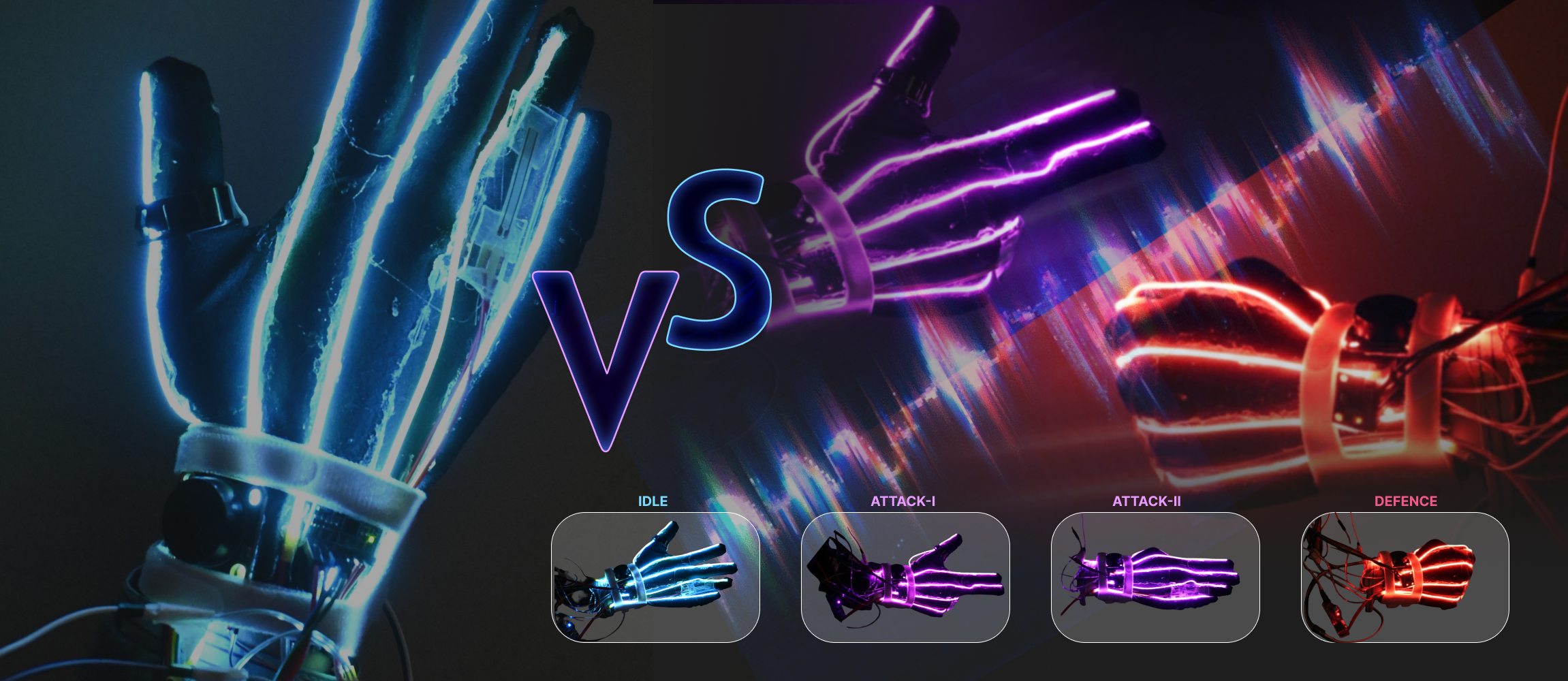
Hands become the controller.
Hand gestures map to game actions during face-to-face play. Attack and defense depend on movements of the wearable controller, making the hands both the input device and the visible action.

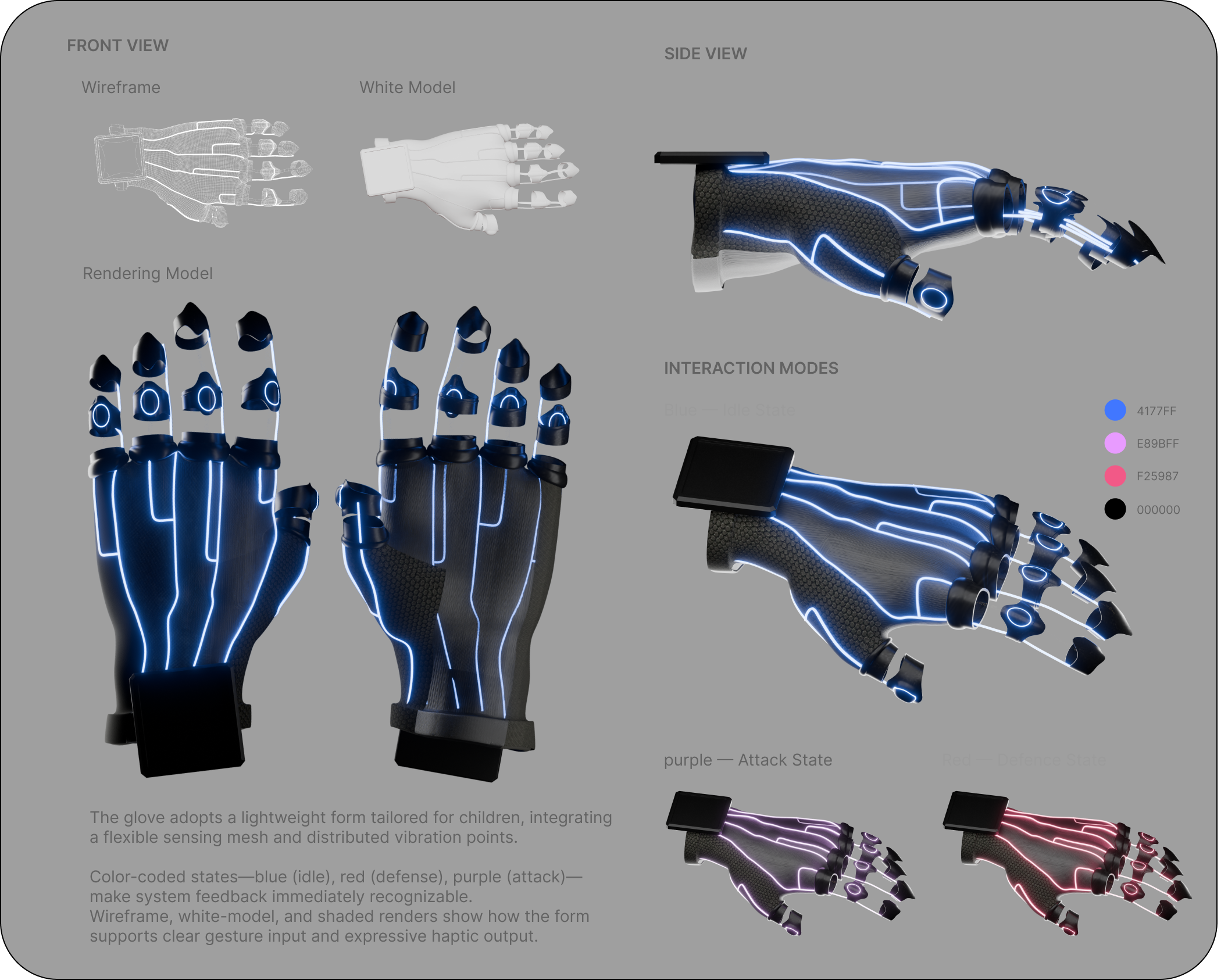
A game worn on the hand.
The glove houses the components needed for gesture-driven play. Its component layout connects the wearable form to the hand movements used for attack and defense.
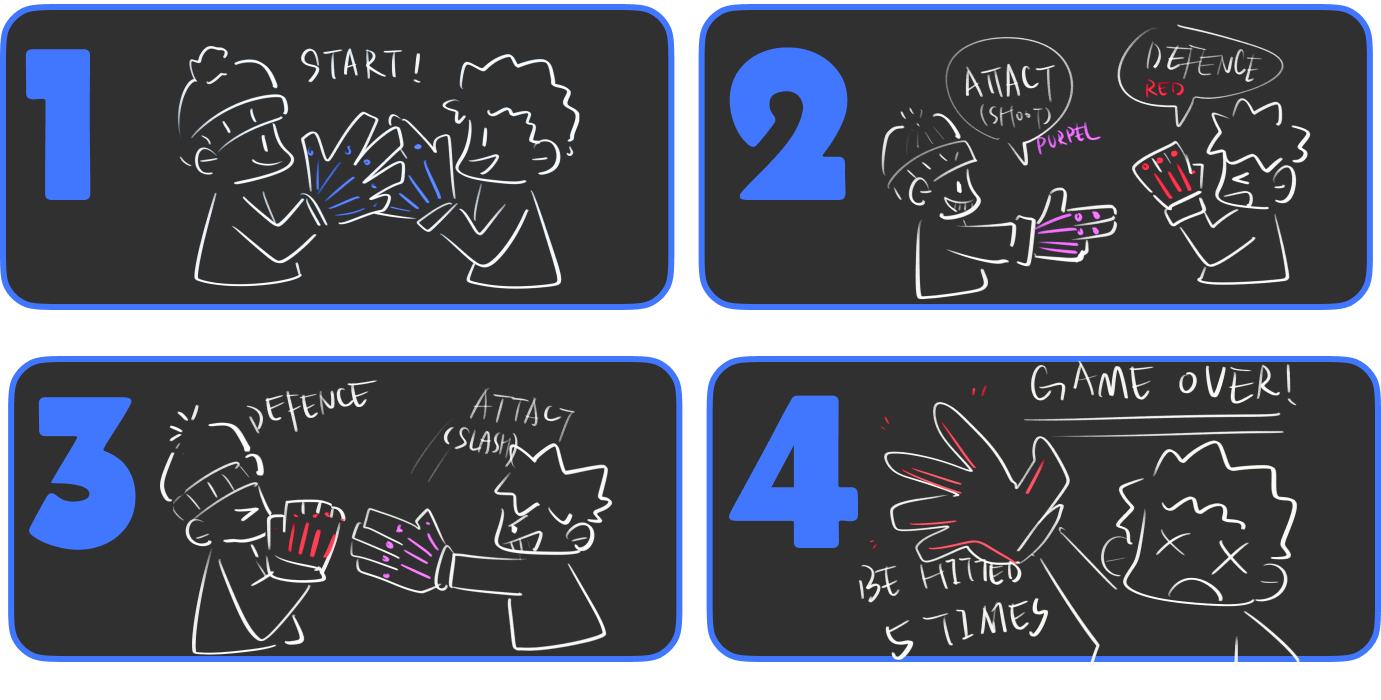
How a round plays.
Players start together, switch between attack and defense gestures, and respond to one another. A round ends at the five-hit condition, connecting the opening gesture to a clear game-over state.
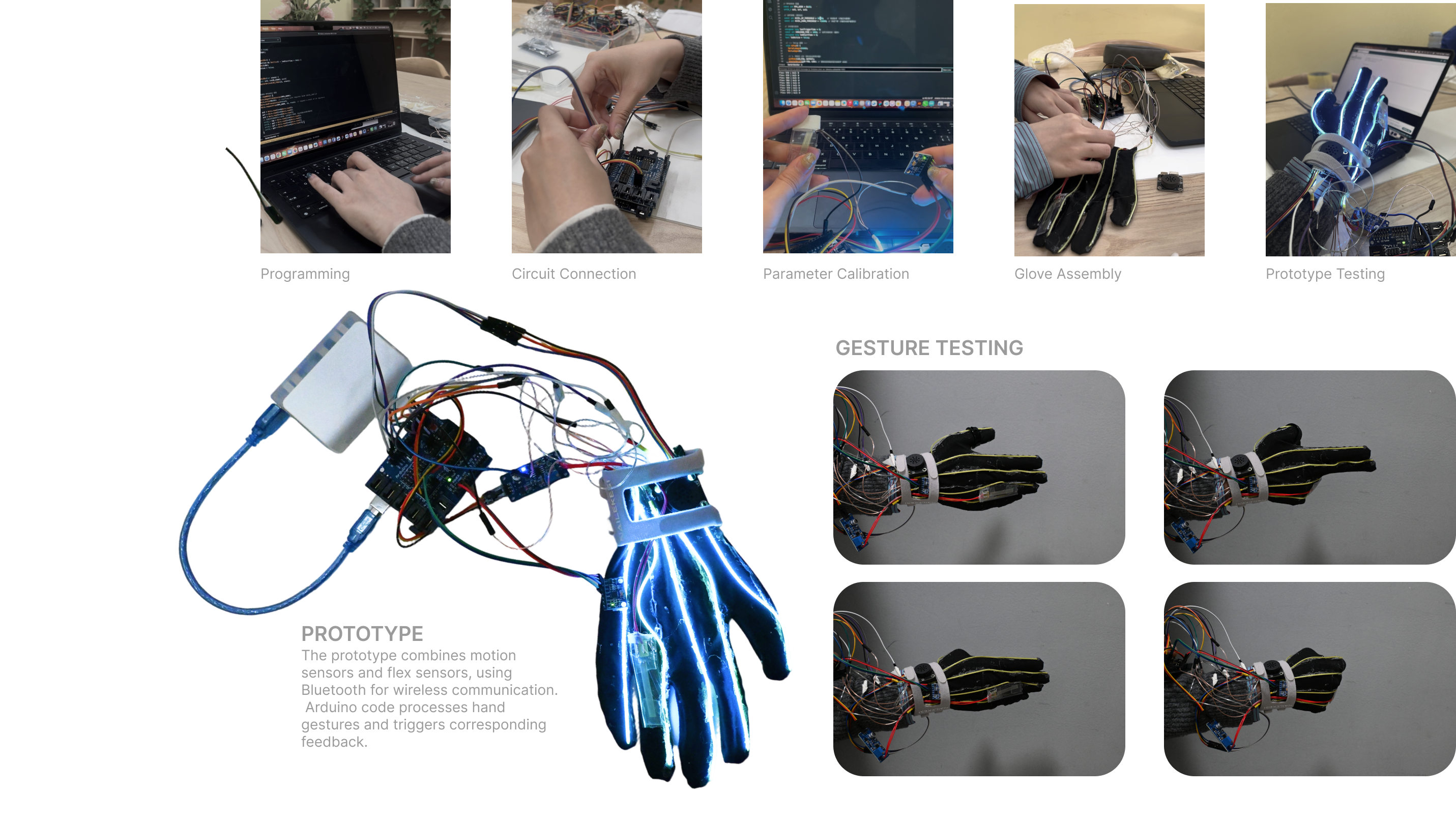
From wearable form to working hardware.
The assembled glove integrates the components into a wearable controller. Gesture demonstrations connect the physical build to the attack and defense actions used in a round.