Creative technology · Musical interaction / May–Jun 2025
Auralith
Crystals you can play.
Auralith began with a speculative question: as people live farther from familiar places, how might memories and human traces become something tangible and perceptible? The project explores crystals as a material for this connection. The realized work is a playable musical-crystal installation, using programming, hardware interaction, OpenCV-based crystal-data-to-audio translation, and AI music generation via API.

Play the crystals.
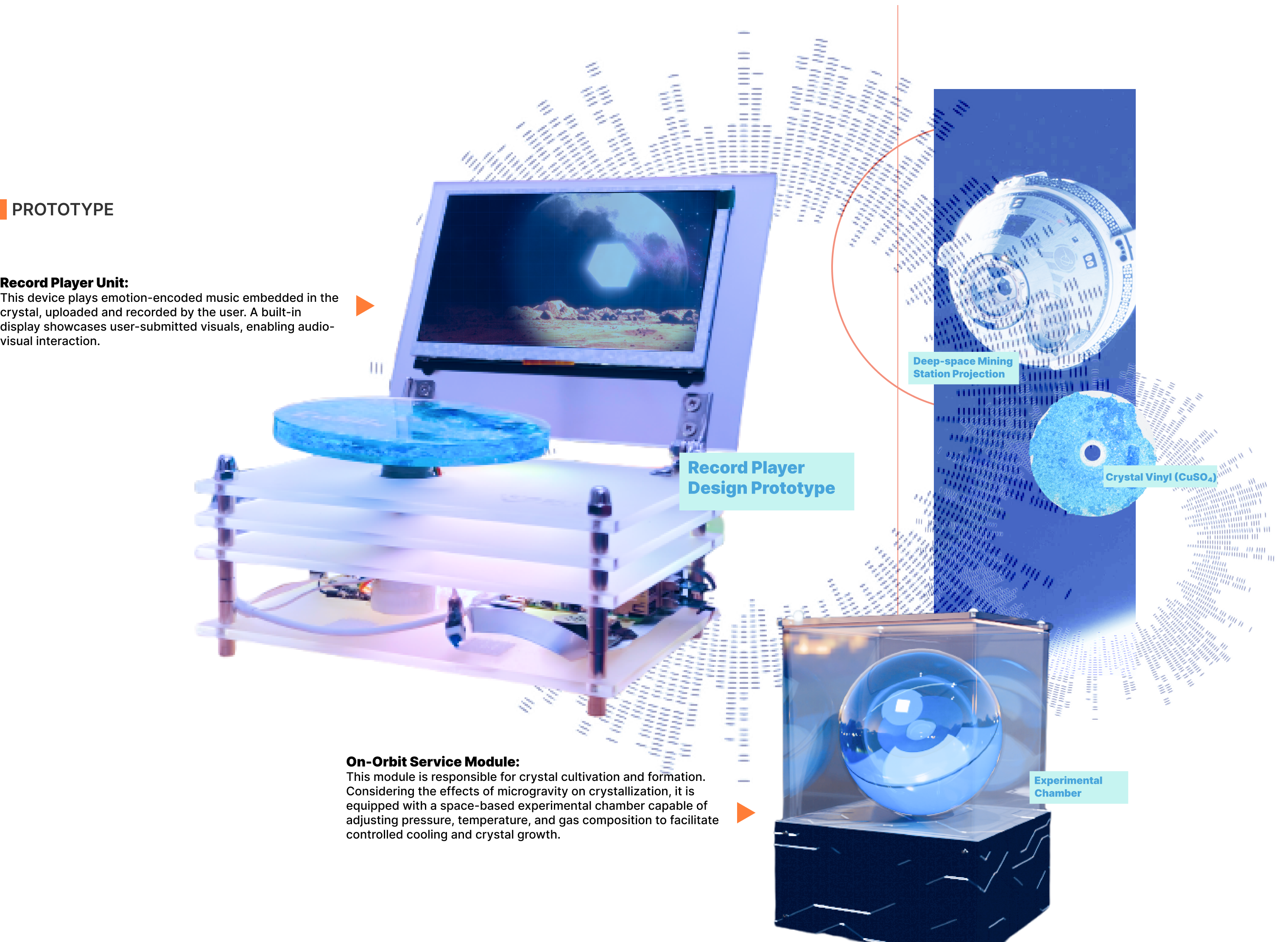
A crystal disc becomes a playable musical object on a record-player prototype. The demonstration brings together physical rotation, generated sound, and animated visuals.
From crystal data to sound.
OpenCV extracts visual patterns from crystal images, which are mapped through frequency analysis into initial audio structures. The Suno API extends this audio into generative electronic music.
- Crystal data
- OpenCV-based translation
- Audio interaction
- AI music via API
An object you can play.
A blue CuSO₄ crystal disc sits on a motorized platform, with a screen behind it and electronics housed beneath layered acrylic plates. An NFC trigger activates rotation and synchronized animation playback through a Raspberry Pi system.
The crystals.
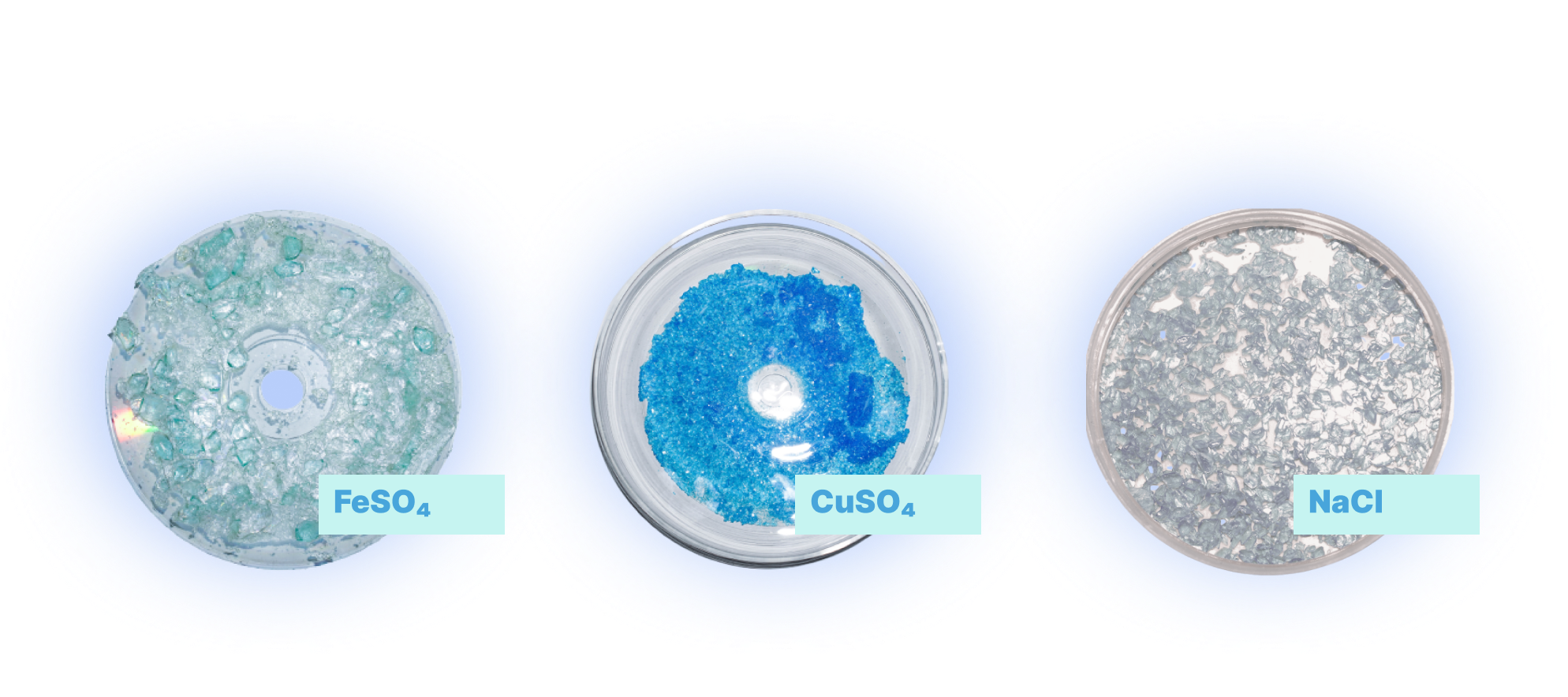
FeSO₄ forms pale green clusters, CuSO₄ produces blue granules, and NaCl appears as clear-to-white angular crystals. OpenCV extracts visual patterns from the crystal images for the audio-generation pipeline.
Exhibited in Osaka and Beijing.
Auralith was shown at TEAM EXPO 2025 in Osaka, as part of the Futurescaping: Shaping Tomorrow’s Communities exhibition by the Global Design Futures Network. It was also exhibited at Beijing International Design Week 2025 in the theme exhibition 未来图景2025:新境启航.
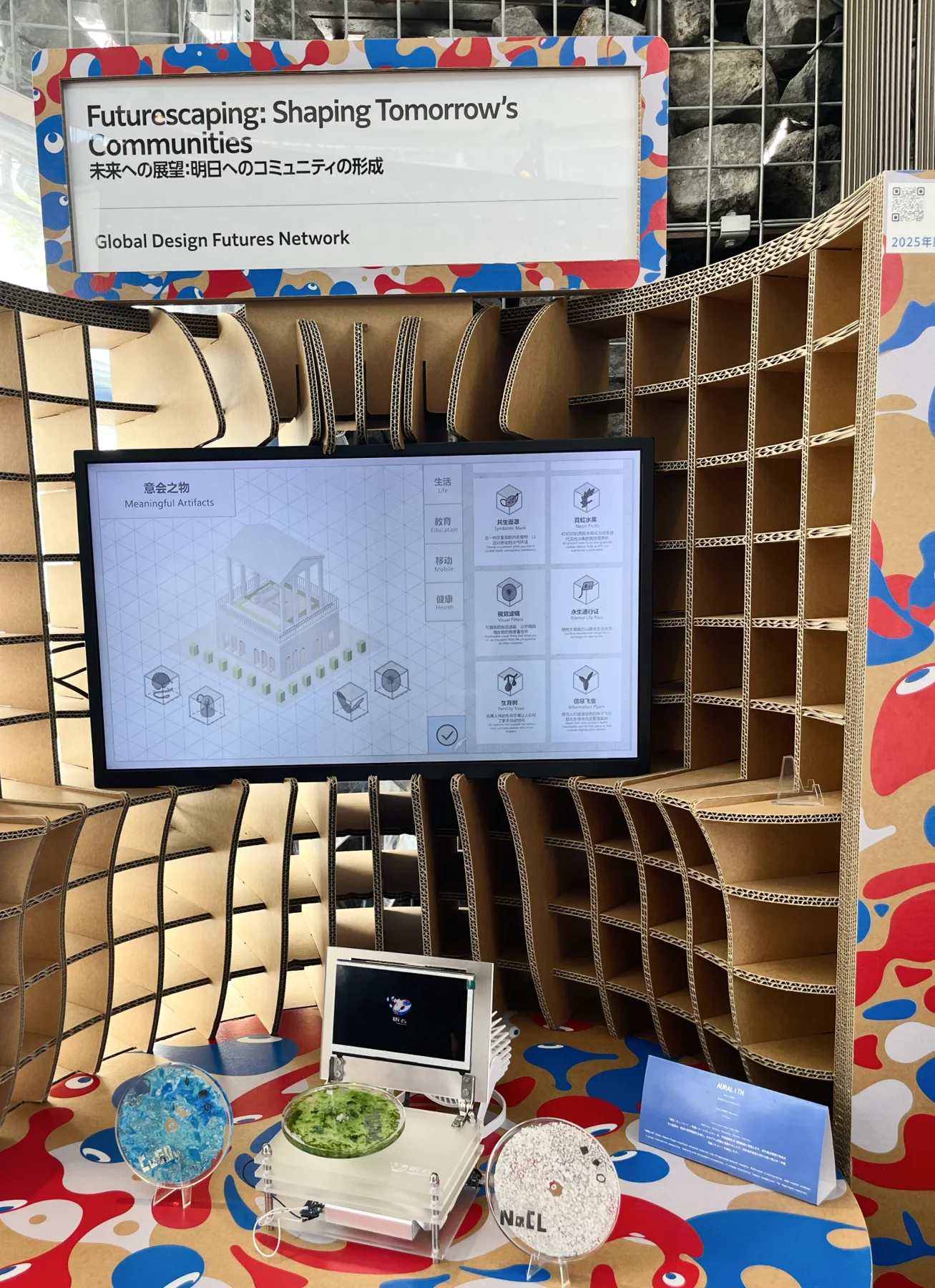
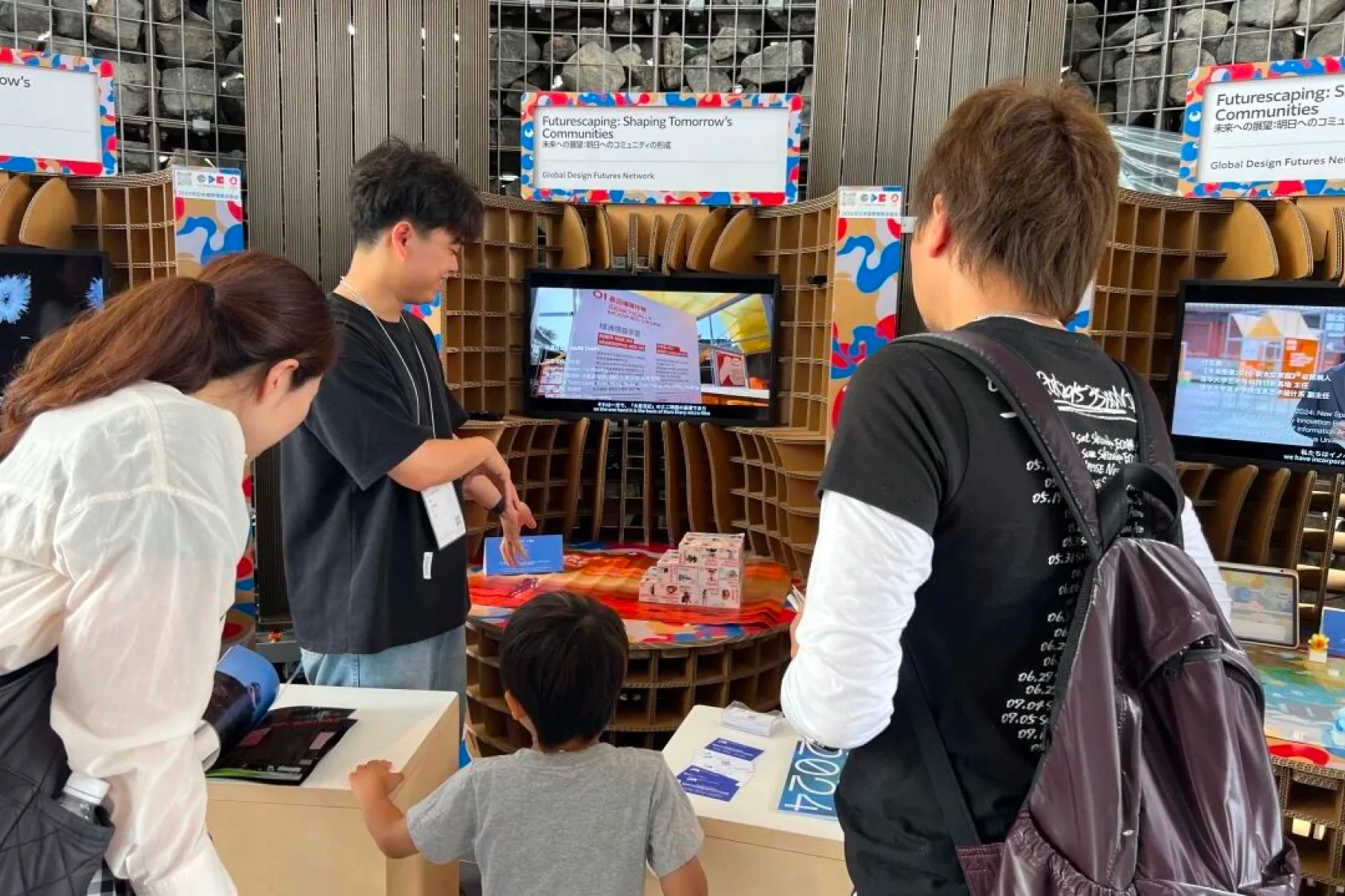
- TEAM EXPO 2025, OsakaFuturescaping: Shaping Tomorrow’s Communities · Global Design Futures Network
- Beijing International Design Week 2025Theme exhibition 未来图景2025:新境启航