Game interaction · Playable prototype / 2025
PATHESIA
Turning choices into a playable system.
PATHESIA responds to the pressure to choose the “right” path at major life milestones, particularly in East Asian social contexts. It invites players to approach decisions as opportunities to explore rather than irreversible tests. The playable Unity game combines route-building puzzles, dialogue, and interactive scenes: encounters unlock new pieces, and different journeys lead toward the same destination.
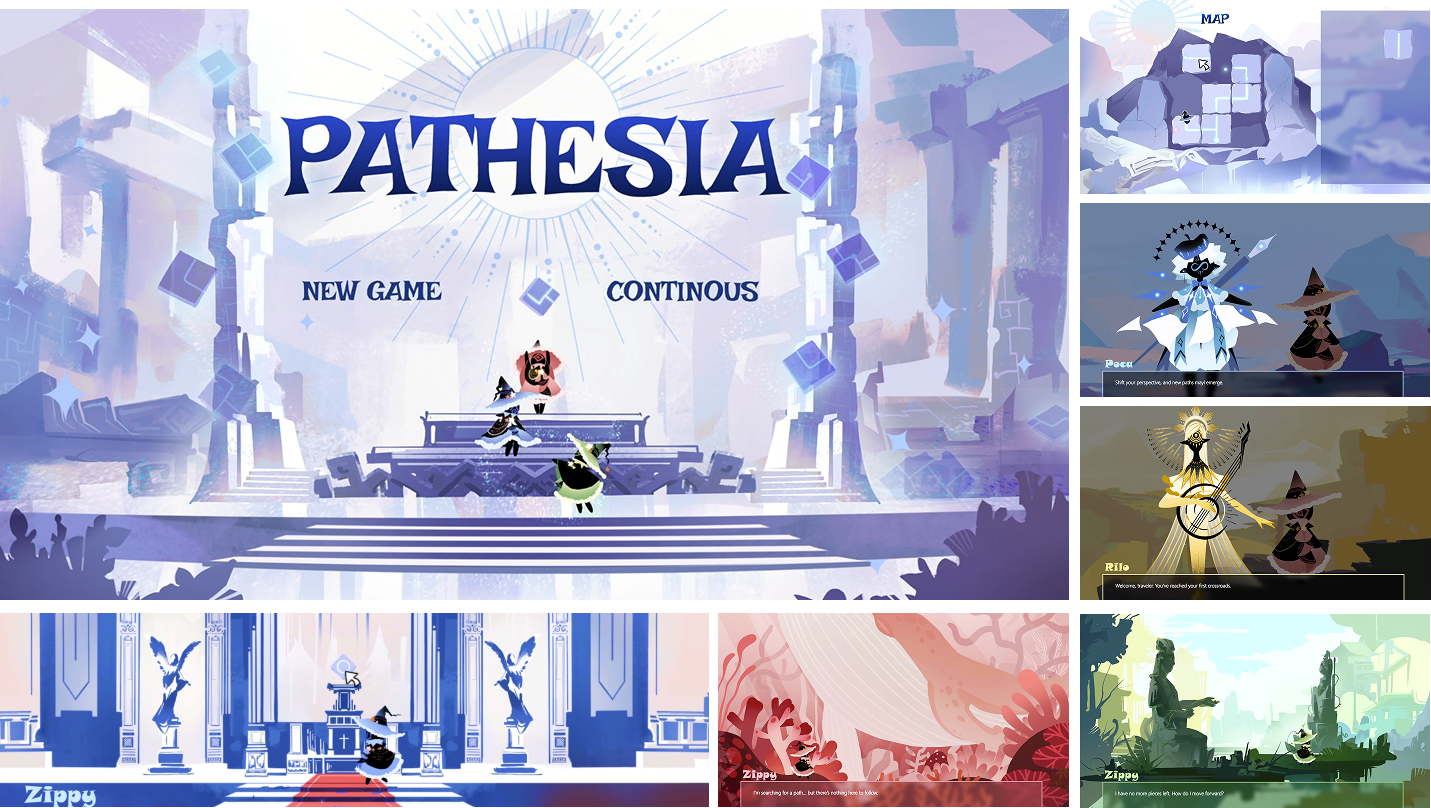
Build your own way through.
Place route-shaped pieces to reach character encounters. Dialogue unlocks new pieces that return to the board, connecting each conversation to the next spatial puzzle.
- Build a route
- Reach an encounter
- Explore dialogue
- Bring new pieces to the board
Watch the loop unfold.
The playable demo brings route construction, dialogue, and scene exploration together. It shows how moving between the board and encounters structures the experience.
Different journeys. The same destination.
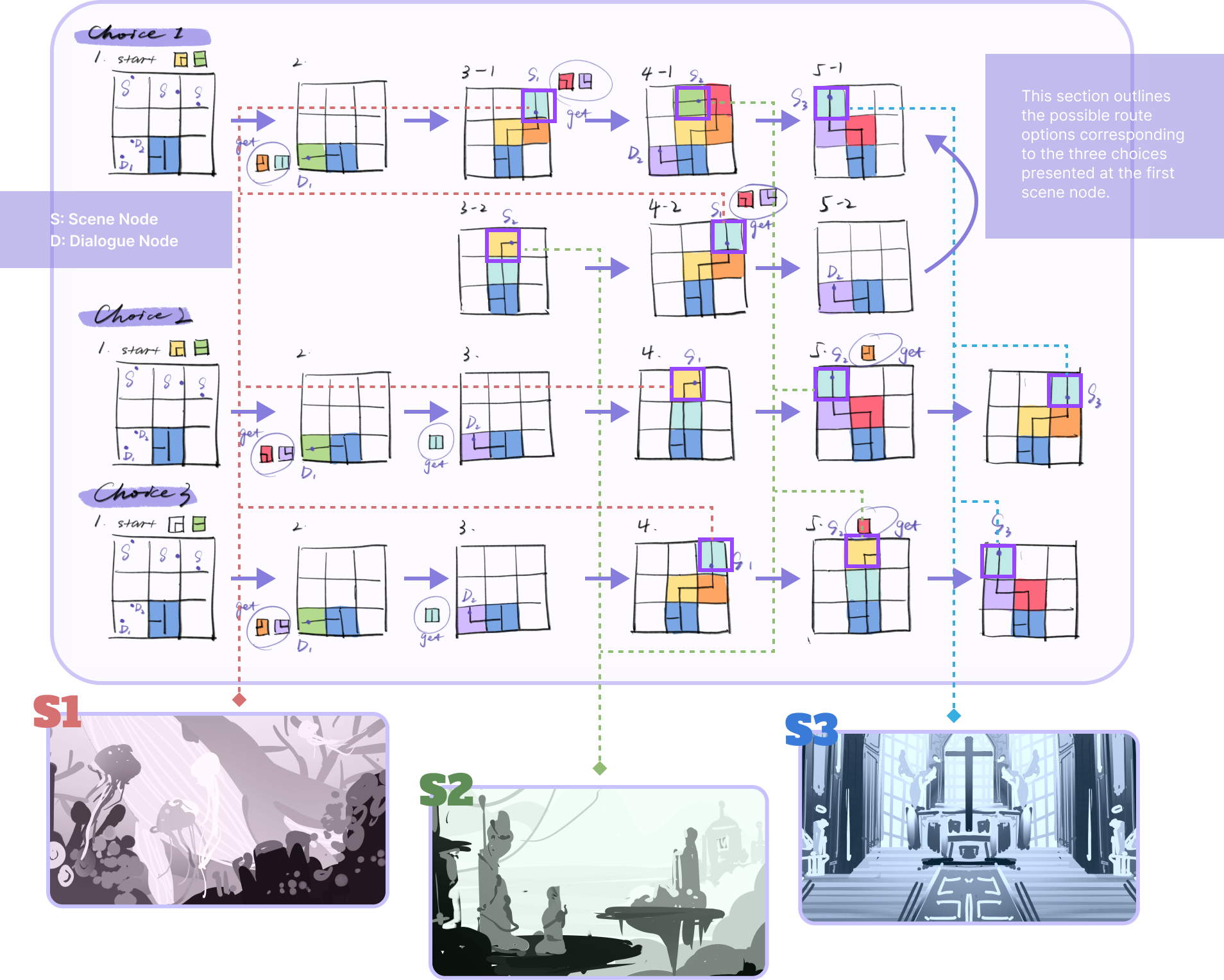
The destination stays visible while players assemble their own routes. Different paths lead through different character encounters before converging at a shared ending.
A world connected by play.
Three route demos connect puzzle solving, dialogue, and exploration in Unity. Character encounters sit along the paths players construct, linking the board to the final game scenes.
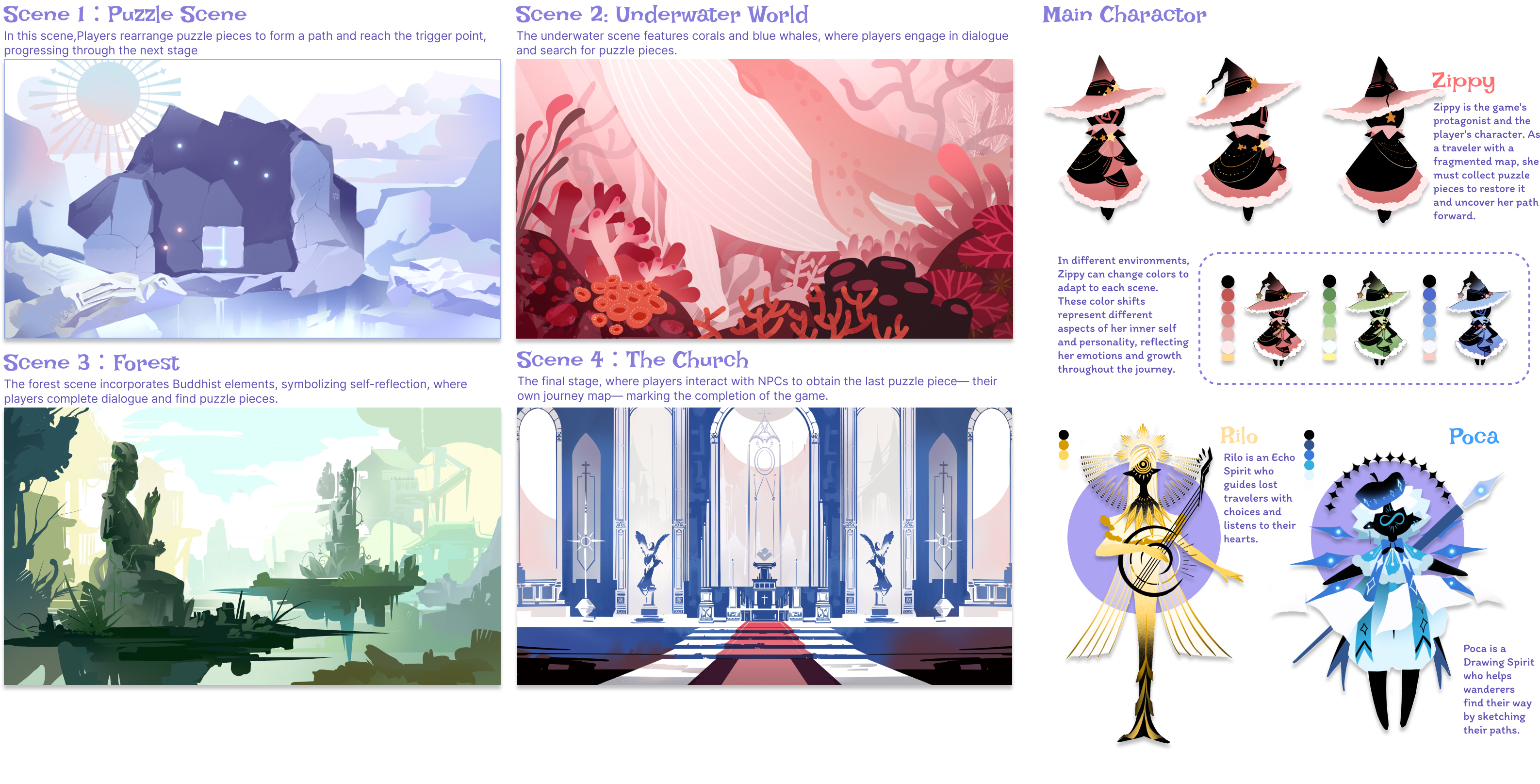
Keep the destination visible. Make the route negotiable.
A visible goal gives players direction without prescribing a single sequence. Route-shaped pieces let them construct the path themselves.
Connect narrative choices to the board.
Encounters can reward new puzzle pieces. Players return to the board with new possibilities, connecting dialogue to what they can do next.
Use a shared ending to change what ‘success’ means.
The routes converge, while the order of encounters differs. This makes the journey the variable. The current prototype prioritizes a complete loop over a large branching story.